Ami Hostel’s No-Return Rule After Leaving
Norwegian WoodAmi Hostel’s No-Return Rule After Leaving is the boundary that makes life inside the sanatorium both voluntary and difficult to reverse. Residents may leave, but they cannot return; together with the ordinary prohibition on going into town, the rule keeps the community apart from everyday urban life while making departure a consequential choice rather than a temporary outing.
The Rule and Its Setting
Reiko explains that residents are not ordinarily allowed into town. A special trip, such as a visit to the dentist, is an exception, but a resident cannot spend a few days in town and then come back: leaving burns the bridges behind. In her account, the restriction follows from the practical problem of people continually coming and going. The rule is therefore not a locked gate or compulsory confinement. Each person is free to leave, but the freedom is one-way.
That distinction is set against the hostel’s physical openness. Its grounds lie beyond a mountain road; the trail reaches a sign marked “AMI HOSTEL PRIVATE NO TRESPASSING,” yet the black iron gate stands open and no one is in the guardhouse. The openness makes the rule less visible than a wall or guard, but does not make it less decisive. The boundary is enforced through the terms of residence and the loss of a place in the community, not through a gate that physically prevents exit.
A Community Apart
The rule operates within a deliberately self-sufficient settlement. Reiko describes food from the hostel’s own production, eggs from its chicken coop, and access to books, records, exercise facilities, a convenience store, visiting barbers and beauticians, and weekend films. Special purchases can be arranged through staff, and clothing is ordered from catalogues. Residents need not enter town for ordinary provisions, while the no-return condition makes leaving for a short change of scene impossible.
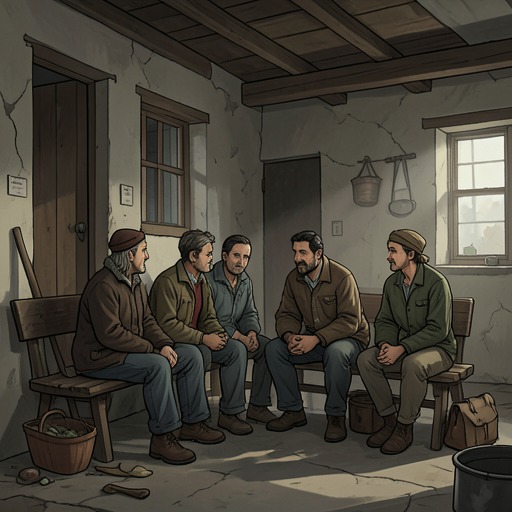
The scale and organization of the place reinforce its separation. About seventy residents live there alongside just over twenty staff members, in a broad, nature-filled setting that can feel like the normal world precisely because it is quiet and removed from ordinary life. In the women’s Area C, ten similar houses provide forty units designed for two people each, though only thirty-two residents currently live there. Residents follow individual schedules that can include exercise, gardening, group therapy, gathering wild plants, or work around the grounds. The rule governs access to the outside, while daily routines and shared facilities supply much of what residents need within.
Convalescence, Choice, and Its Limits
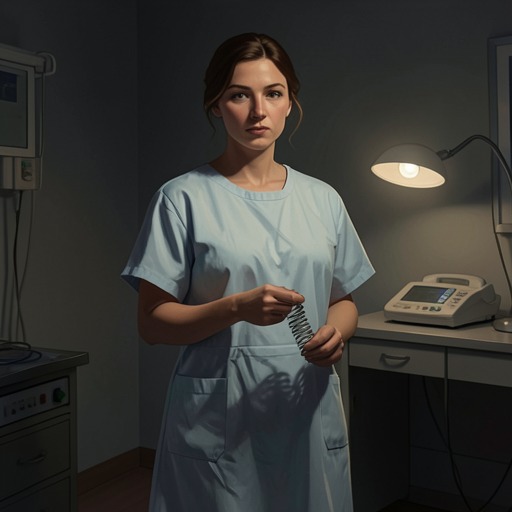
Reiko distinguishes the hostel from an ordinary hospital: it is primarily a place for convalescence, with doctors checking residents’ conditions rather than administering the routine treatment of a conventional hospital. There are no bars on the windows, and people enter and leave voluntarily; admission depends on being suited to this form of recovery. Residents and staff can also occupy overlapping roles. Reiko, for instance, has lived there for seven years, teaches music as therapy, and helps in the office, so she says it has become difficult to tell whether she is a patient or staff member.
This model of care depends on a shared acceptance of vulnerability. The doctor in charge tells Reiko that the aim is not simply to correct people’s “deformities,” but to help them become accustomed to them and recognize what they cannot quickly change. Within the hostel, residents can acknowledge those differences openly and try not to hurt one another. Its quiet mutual life is thus a form of shelter, but not a promise that the hostel can meet every need indefinitely.
Departure and the Boundary of Care
The no-return rule becomes especially consequential when a resident’s condition exceeds what the hostel can manage. In a letter, Reiko reports that Naoko has become increasingly unstable at times, including episodes in which she hears voices and withdraws completely into herself. After a discussion involving Naoko’s mother, the doctor, Reiko, and Naoko, they conclude that she should move temporarily to a proper hospital for intensive treatment, with the possibility of returning depending on the results. Reiko agrees that a specialist institution is needed, even though she expects to miss and worry about Naoko.
The transfer exposes the limit built into the hostel’s freedom of exit: voluntary departure does not guarantee that the community will remain available afterward. The rule makes the hostel a refuge from ordinary social life, sustained by quiet routines and mutual accommodation, while also giving departure the weight of separation. Its threshold is open, but crossing it may mean losing the home that made recovery possible.